Where it anchors
The zygomatic implant is longer than a conventional one and is fixed in the cheekbone (the zygoma), a dense structure that does not resorb the way the upper jaw does after tooth loss.
Natal, Brazil · CRO-RN 2966
That sentence ends most implant consultations. It should not end yours without a second look. Zygomatic implants anchor in the cheekbone rather than the upper jaw, which is why severe bone loss does not rule them out.
Why you are here
Most patients who reach this page have already heard one of three answers: that they need a graft first, that they should wait, or that implants are simply not possible for them. All three assume the implant has to go into the upper jaw.
The zygomatic implant is longer than a conventional one and is fixed in the cheekbone (the zygoma), a dense structure that does not resorb the way the upper jaw does after tooth loss.
Patients with severe atrophy of the upper jaw, failed conventional implants, or a graft that was ruled out or did not take. It is a route for the cases where the usual route closed.
It is not a first-line treatment. If you have enough bone for conventional implants, that is the simpler operation and it is the one you should have.
What the evidence shows
You should be able to check what a surgeon tells you. Both references below are peer-reviewed systematic reviews, cited so you can read them yourself.
A systematic review of 4,556 zygomatic implants in 2,161 patients reported a 95.21% survival rate at 12 years. Reported complications included sinusitis in 2.4% of cases, infection in 2.0%, paresthesia in 1.0% and oroantral fistula in 0.4%.
Chrcanovic BR, Albrektsson T, Wennerberg A. Survival and complications of zygomatic implants: an updated systematic review. J Oral Maxillofac Surg. 2016;74(10):1949–64. doi:10.1016/j.joms.2016.06.166
An earlier review across 42 studies reported 96.7% survival at 12 years, and concluded that the technique “requires very experienced surgeons”.
Chrcanovic BR, Abreu MHNG. Survival and complications of zygomatic implants: a systematic review. Oral Maxillofac Surg. 2012;17(2):81–93. doi:10.1007/s10006-012-0331-z
Those figures describe a body of published cases. They are not a prediction about your case, and no honest surgeon can give you one before seeing your imaging.
Who would treat you
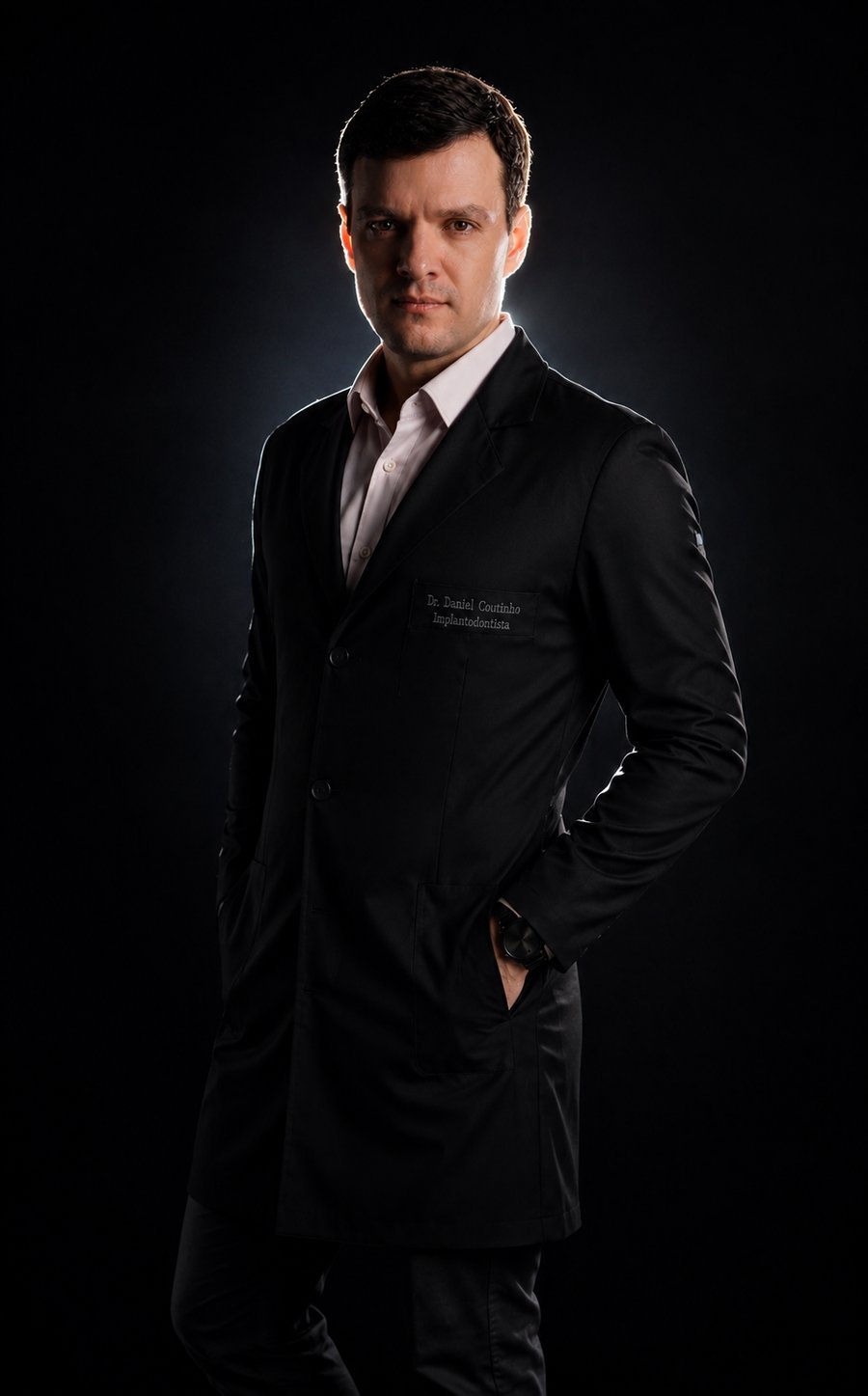
Dr. Daniel Cunha Coutinho graduated in dentistry from UFRN and holds a specialist qualification in Implantology from FOP-UNICAMP. He has practised in Natal, Rio Grande do Norte, since 2005, and has concentrated his training on zygomatic implant surgery — one of the more demanding procedures in the specialty, indicated for severe maxillary atrophy where conventional implants are not viable.
If you are travelling
For patients coming from another country the first appointment is online, without exception. You do not fly here to find out whether you are a candidate. By the time you board, the plan exists, you have seen it in writing, and the surgery is already scheduled.
A scheduled appointment with Dr. Coutinho — not a form and not a salesperson. Your history, what you were told before, what you want back. It ends with exactly which imaging he needs and how to obtain it where you live.
You come back with the CT scan. It is read with you on screen, so you see what he sees. This is where the treatment plan and the written proposal are presented: phases, how long you stay, and the estimate.
You travel only after the plan is agreed. The clinical examination in Natal confirms it — and the surgery for your implants is programmed on that same trip, on dates set before you left home.
Post-operative review is planned around your return date, with remote follow-up afterwards and a documented record you can hand to a dentist at home.
The address, not a stock photo
Ancore is not a building of its own. It operates in Tirol — a residential district in the centre of Natal, about 45 minutes from the airport. When you arrive, ask for Room 14 and give your name.
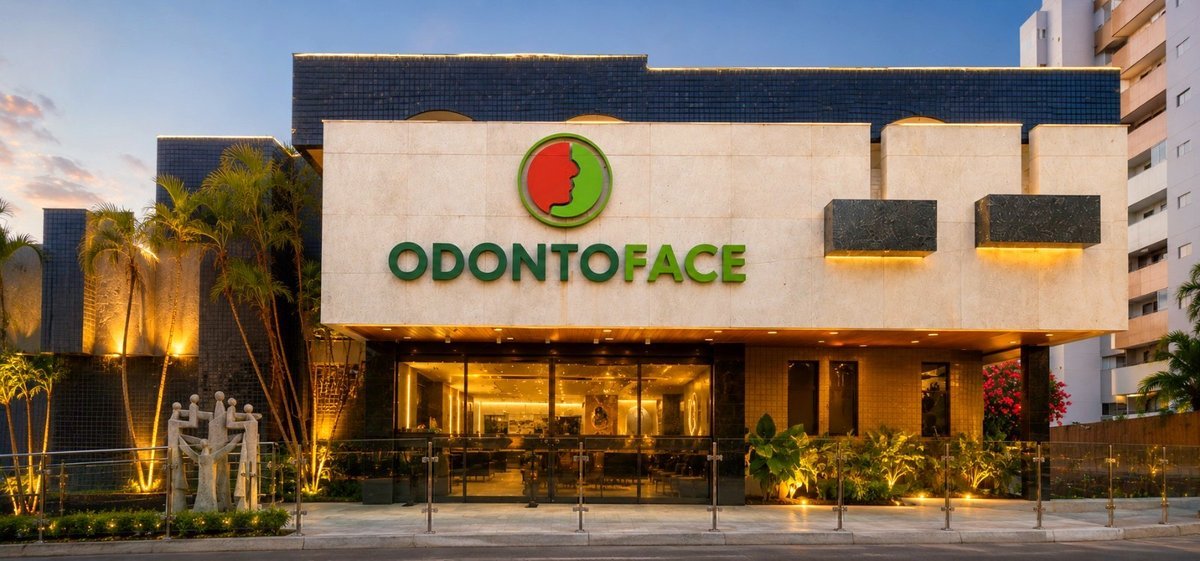
Same address, same reception and same surgeon as the Portuguese-language site. There is no separate “international clinic” — you are treated where Brazilian patients are treated.
Getting here
Natal sits on the eastern shoulder of South America, the part of the continent that pushes furthest into the Atlantic. That is a genuine advantage for European patients and a plain fact worth stating for North Americans: there is no non-stop flight from the United States, and you should plan for one connection.
| From | Distance | Flights |
|---|---|---|
| Lisbon, Portugal | 5,632 km | Non-stop TAP, year-round |
| London / Dublin | 7,192 km | 1 connection via Lisbon |
| Madrid / other EU | 6,063 km | 1 connection via Lisbon |
| Miami, New York, Atlanta | 5,989–6,785 km | 1 connection via São Paulo or Lisbon |
| Toronto | 7,059 km | 1 connection via São Paulo or Lisbon |
Paperwork, before anything else
This is the step that most often derails a trip planned in a hurry, and it changed recently for one large group of patients. Check it before you look at flights.
Since 10 April 2025, holders of these passports need an electronic visa to enter Brazil as tourists. It is applied for online, costs in the region of US$80, and is currently issued for ten years with stays of up to 90 days. Processing is usually a matter of days, not weeks — but it is not instant, so it belongs at the start of your planning, not the end.
Holders of UK, Irish and EU passports do not need a visa for tourism in Brazil for stays of up to 90 days. You will still need a passport valid for the whole trip and evidence of onward travel.
The question everybody arrives with
You are almost certainly comparing what you were quoted at home with what treatment abroad might cost. That is a reasonable thing to do, and we would rather explain the rule we work under than pretend the question does not exist.
Publishing dental prices is an ethical infraction in Brazil. Article 44 of the Brazilian Dental Code of Ethics treats advertising that displays prices, free services or payment terms as an infraction, and Law 5.081/66 prohibits announcing prices and payment conditions as a means of attracting patients. This applies to every registered dentist in the country, including this one.
A practice that publishes a price list, a “package” or a discount for foreign patients is not giving you useful information. It is telling you something about how it treats the rules it works under.
An individual written estimate after assessment, itemised, in Brazilian reais. You convert it at the rate of the day — the figure is not indexed to your currency, and nobody here will quote you one that is.
The number of implants, whether one or both jaws are involved, the type of prosthesis, and whether earlier failed work has to be removed first. This is why an honest figure cannot precede the imaging.
Flights, accommodation for the whole plan rather than the surgery alone, a companion if you want one, and the return trip if your plan has two phases. Budget the journey, not the operation.
If it is the economics you want to understand rather than a number, the long-form piece on what determines the cost of implants in Brazil sets out the factors without quoting figures.
The first appointment is online, and it is a real consultation.You will not be asked to fly anywhere to find out whether you are a candidate. If the case is not one for zygomatic implants, you will be told that on the screen, from home.
Book the first consultationBeing honest about the “dental holiday”
Natal is a coastal city of warm, stable weather — roughly 28 °C most of the year, with no real winter. Plenty of patients bring a companion and turn the trip into something more than a surgical appointment. That is a fair use of the journey, and it works well if it is planned around the treatment rather than against it.
Yours to use as you like. Arriving a day or two early is sensible anyway: it absorbs a delayed connection and lets you attend the assessment rested rather than straight off a long flight.
Rest, soft diet, and no sun, sea, alcohol or exertion. Buggy rides over the dunes, diving and long days on the beach are exactly what you should not be doing while a surgical site is healing.
If your plan has two phases, the interval is when the city is genuinely enjoyable — and when a companion has something to do. That interval is defined by your case, and it is agreed before you travel.
Before you write
No — it is close to the opposite. The zygomatic technique exists precisely for anatomies where grafting was ruled out, declined or did not take, because the implant anchors in the cheekbone rather than in the grafted area.
Not reliably. Photographs show almost nothing about available bone. A CT scan allows a useful preliminary opinion; the definitive one still requires an in-person examination.
English. Written contact is handled in English and Portuguese, so please write in English rather than your own language — it keeps the clinical detail accurate. Messages to the clinic reception are normally answered within minutes during clinic hours.
That depends entirely on the plan agreed for your case, and it is one of the things settled before you travel rather than after you arrive. Do not book non-refundable travel before the plan is confirmed.
No price appears anywhere on this site, and that is not evasion. Article 44 of the Brazilian Dental Code of Ethics treats advertising that displays prices or payment terms as an ethical infraction, and Law 5.081/66 prohibits announcing prices to attract patients. Figures are given individually, after assessment, in writing, in Brazilian reais.
If you hold a US, Canadian or Australian passport, yes — an electronic visa has been required since 10 April 2025. It is obtained online in a matter of days and is currently issued for ten years. UK, Irish and EU passport holders do not need one for a tourist stay of up to 90 days. Confirm your own case with the Brazilian government portal before booking non-refundable travel.
No. Natal has one non-stop intercontinental route, to Lisbon with TAP, and non-stop services to Buenos Aires and Montevideo. From North America you should plan one connection, through São Paulo or through Lisbon.
Partly, and it depends on timing rather than willingness. The days before surgery and any interval between phases are yours. The days immediately after surgery are for resting — no sun, sea, alcohol or exertion while the surgical site heals. Many patients bring a companion for exactly this reason.
It is common in the patients seen here and it is part of the assessment rather than an obstacle to it. Bring whatever records you have from the earlier treatment.
Read before deciding
The full explanation of the procedure, who it is indicated for, and what the published evidence supports.
How Brazilian dental regulation works, what a CRO number means, and what to verify before choosing any clinic abroad.
The factors that move the figure, and why a responsible quote cannot be given before assessment.
What foreign patients are actually looking for, and the questions worth asking before crossing a border for surgery.
Send your history and imaging. You will be told honestly whether this is a case for zygomatic implants — including when it is not.